Drive through the older parts of Santa Ana, near the Civic Center, and you'll notice the asphalt holds up differently than on newer stretches out near the 55 freeway. That difference often comes down to subgrade variability. The alluvial soils under the city shift from sandy loam near the Santa Ana River to denser clay layers by the foothills. A CBR study for road design in Santa Ana catches that variability before the first layer of base rock goes down. We've seen projects where ignoring those local soil changes led to premature cracking within two years. A thorough CBR study for road design in Santa Ana gives engineers the numbers they need — soaked and unsoaked — to set realistic pavement thickness. Before we run the CBR, we often recommend a granulometry to classify the soil matrix and a geotextile assessment if the subgrade sits above the water table.
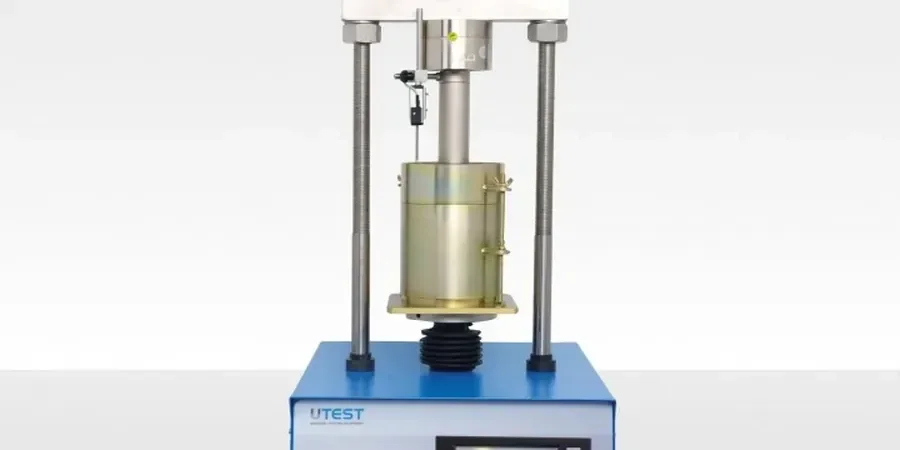
A CBR value of 3 versus 6 can change a pavement section by four inches of base rock.
Scope of work in Santa Ana
Risks and considerations in Santa Ana
Santa Ana's urban development expanded rapidly after World War II, pushing infrastructure over old agricultural land and river terraces. Those former orange groves left behind a shallow topsoil layer over compacted alluvium. Without a CBR study for road design in Santa Ana, engineers risk designing pavements on a surface that looks firm in summer but softens dramatically after a wet January. The city's flat terrain also means poor natural drainage, so the subgrade stays saturated longer. That combination of variable alluvium and slow drainage is exactly what makes the CBR test — soaked, not dry — the right tool for this area.
This service complements our laboratory testing work for a complete project analysis.
Our services
We provide end-to-end laboratory support for pavement design in Santa Ana, from sampling to final reports ready for Caltrans or municipal review.
Field Sampling and Soil Classification
We collect bulk and undisturbed samples from boreholes or test pits across your alignment. Each sample is classified by USCS and AASHTO before the CBR study.
CBR Penetration Testing
Laboratory CBR at 95% and 100% modified Proctor density, soaked 96 hours, with swell measurements. Results include load-penetration curves and design CBR.
Pavement Section Recommendations
Based on the CBR study for road design in Santa Ana, we suggest structural number and layer thickness ranges using AASHTO 1993 or mechanistic-empirical methods.
Q&A
What does CBR stand for in road design?
CBR stands for California Bearing Ratio, a penetration test developed by Caltrans in the 1920s. It measures the load-bearing capacity of a soil compared to a standard crushed rock. Higher CBR values mean stronger subgrade and thinner pavement sections.
How many CBR samples do I need per mile of road?
AASHTO R 13 recommends at least one CBR test per 500 feet of alignment for major roads, and one per 1000 feet for secondary roads. In variable alluvial soils like Santa Ana, we often double that frequency to catch soil lens changes.
Why soak the samples for the CBR test?
Soaking simulates the worst-case moisture condition after prolonged rain. Santa Ana gets about 14 inches of rain per year, mostly in winter, and the flat terrain holds water. A soaked CBR value can be half of the unsoaked value, so designing with the soaked number prevents overestimating subgrade strength.
Do you deliver the report in Caltrans format?
Yes. Our reports follow Caltrans Standard Specifications and include the CBR test data sheet, swell measurements, moisture-density curves, and a summary design CBR for each subgrade zone. We also provide electronic copies for direct upload to project portals.