Our Santa Ana office provides comprehensive geotechnical services tailored to the unique conditions of Orange County. From subsurface investigations and foundation design to slope stability assessments and construction monitoring, we deliver code-compliant solutions that support safe and efficient development. Whether you are planning a commercial building, residential subdivision, or infrastructure project, our team combines consolidated regional experience with advanced laboratory testing to characterize site conditions accurately. We coordinate closely with local authorities and contractors to streamline permitting and construction, ensuring your project progresses without delays. Explore our exploratory pit services for direct observation of subsurface strata or learn how geogrid specification can reinforce weak soils in your next project.
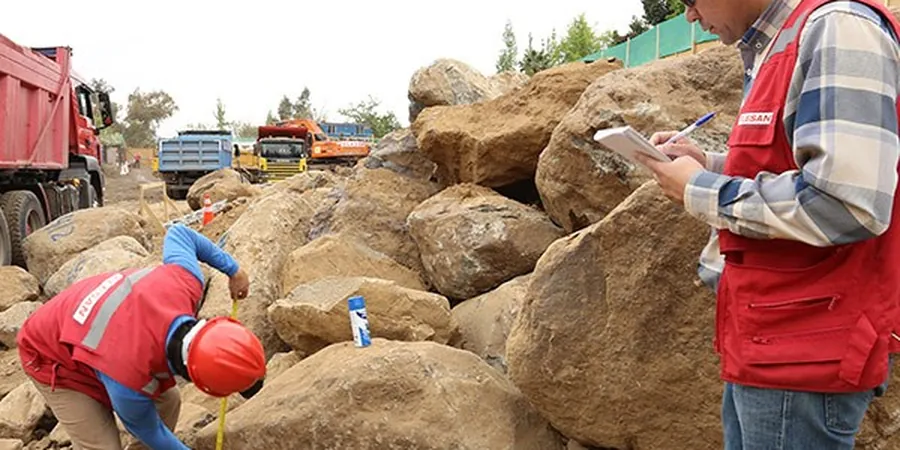
Scope of work in Santa Ana
Live process video
Risks and considerations in Santa Ana
Our firm brings consolidated regional experience to every Santa Ana project, having completed numerous subsurface investigations across Orange County’s varied geologic settings. We maintain a calibrated laboratory equipped for advanced testing, including direct shear, consolidation, and triaxial strength tests. Our team is well-versed in local permitting processes and works closely with city engineers and building officials to ensure code-compliant reports that expedite plan review. We coordinate with local earthwork contractors and testing laboratories to provide smooth construction-phase support, from observation of fill placement to verification of foundation bearing capacity. This local focus minimizes project risks and helps clients achieve their development goals efficiently.
This service complements our laboratory testing work for a complete project analysis.
Our services
Q&A
What are the typical soil conditions in Santa Ana for a commercial building?
Santa Ana soils generally consist of interbedded sands, silts, and clays from alluvial deposits. Loose sands and soft clays are common near the surface, requiring careful foundation design. We typically recommend spread footings bearing on engineered fill or deeper foundations like driven piles where liquefiable sands are present. Groundwater is often encountered at 10–30 feet depth, so dewatering or waterproofing may be needed for basements.
How does seismic activity affect foundation design in Santa Ana?
Santa Ana is in a seismically active region with potential for strong ground shaking from nearby faults. Site-specific seismic hazard analysis per ASCE 7-22 is required to determine design ground motions. Liquefaction is a key concern in loose saturated sands, so we evaluate settlement and lateral spreading risks. Mitigation measures may include Improvement, deep foundations, or soil densification to ensure structural safety.
What geotechnical reports are required for a Santa Ana development permit?
The City of Santa Ana typically requires a geotechnical investigation report prepared under the supervision of a California-licensed geotechnical engineer. The report must include site geology, soil profiles, laboratory test results, foundation recommendations, seismic hazards evaluation, and if needed, slope stability analysis. Reports must comply with CBC Chapter 18 and ASCE 7-22, and are reviewed by the city’s building department during plan check.
Do I need a geotechnical engineer for a small residential addition in Santa Ana?
Yes, even small additions may require a geotechnical evaluation, especially if the project involves new foundations or grading. The city often asks for a letter or report to confirm soil bearing capacity, expansion potential, and seismic site class. We can provide a focused investigation with limited borings and laboratory tests to meet these requirements efficiently, avoiding costly redesigns later.