Santa Ana sits at an elevation of just 62 feet above sea level, yet its subsurface conditions are anything but shallow. The city's alluvial plain, formed by the Santa Ana River, features layered sequences of soft clays, silty sands, and loose sands extending up to 40 meters deep. These deposits present low bearing capacities and high liquefaction potential under seismic loading. Deep soil mixing design offers a proven method to improve ground stiffness and reduce settlement risks. Before executing DSM columns, engineers rely on detailed site characterization — often starting with an ensayo SPT to map N-values across the profile and identify critical weak zones.
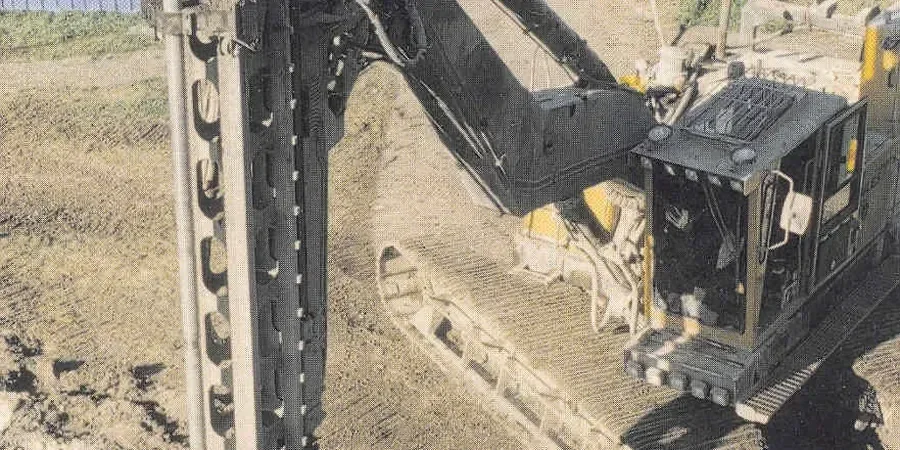
For Santa Ana's soft alluvial soils, deep soil mixing design achieves UCS values of 0.5–3.0 MPa while reducing settlement by 60–80% compared to untreated ground.
Scope of work in Santa Ana
Risks and considerations in Santa Ana
Santa Ana's Mediterranean climate features dry summers and periodic winter storms that saturate the upper soil layers. Rapid infiltration from heavy El Niño events can temporarily raise the water table within 2 meters of the surface. For deep soil mixing design, this means the binder hydration process must account for elevated moisture content in the shallow zone. If not properly adjusted, excessive water can delay strength gain and reduce the final UCS. Additionally, the seismic risk from the nearby Elsinore and San Jacinto fault zones requires that DSM-treated ground be designed to resist cyclic softening during a magnitude 6.5–7.0 event.
This service complements our laboratory testing work for a complete project analysis.
Our services
Our deep soil mixing design services in Santa Ana cover the full workflow from site investigation through final column layout.
DSM Column Layout & Strength Design
We develop column diameter, spacing, and binder dosage based on target UCS and allowable settlement. Designs follow FHWA deep mixing guidelines and IBC 2021 requirements for seismic areas.
Binder Optimization & Mix Design
Laboratory trials using Santa Ana soil samples determine the optimal cement, slag, or lime content. We test unconfined compressive strength at 7, 14, and 28 days to verify field performance.
Verification Testing & Quality Control
Field verification includes coring through DSM columns, performing unconfined compression tests, and cross-checking with in-situ shear wave velocity measurements to confirm treatment uniformity.
Q&A
What is deep soil mixing (DSM) and how does it work?
Deep soil mixing is a Improvement technique where a rotating mixing tool blends in-situ soil with a cementitious binder (cement, lime, or slag) to form stiff columns or panels. The process increases soil strength and reduces compressibility. In Santa Ana, DSM is commonly applied to treat soft alluvial clays and loose sands beneath foundations, embankments, and retaining structures.
How much does deep soil mixing design cost in Santa Ana?
The typical cost for deep soil mixing design in Santa Ana ranges from US$1,720 to US$6,190, depending on the number of soil samples tested, column layout complexity, and the level of verification testing required. Projects with unusual binder optimization or deep treatment zones fall at the higher end.
What soil conditions in Santa Ana require DSM treatment?
Santa Ana's alluvial deposits include soft clays with undrained shear strengths below 25 kPa and loose sands with SPT N-values of 3–8. These soils are prone to excessive settlement and liquefaction during earthquakes. DSM treatment is recommended for structures sensitive to differential movement or where foundation loads exceed 150 kPa.
How long does the DSM design process take?
A typical DSM design project in Santa Ana takes 3 to 5 weeks from soil sampling to final column layout. This includes laboratory mix testing (2–3 weeks for 28-day UCS results), numerical modeling of settlement and stability, and preparation of construction specifications. Expedited schedules can be arranged for urgent projects.
Does DSM work for liquefaction mitigation in Santa Ana?
Yes, deep soil mixing is an effective liquefaction mitigation technique. By replacing or improving loose, saturated sands with stiff DSM columns, the treated ground can resist cyclic softening during a seismic event. Design follows the simplified procedure from Youd & Idriss (2001) and ASCE 7-22 seismic hazard maps for Orange County.