We roll up to your Santa Ana site with a sand cone apparatus, a base plate, and a few bags of clean, dry Ottawa sand. The crew sets up on the compacted lift, digs a small cylindrical hole, and carefully measures the mass of the extracted soil. After filling the hole with sand from the cone, we calculate the in-place density back at the lab. It is a straightforward, reliable test that has been a staple of compaction control for decades. In Santa Ana, where alluvial soils vary within a single block, the sand cone method gives us the granular data needed to confirm that each lift meets the project specification. For deeper characterization, we often pair this with a calicatas exploratorias to see the soil profile below the surface.
The sand cone method still beats nuclear gauges on gravelly fills where backscatter readings drift. It is simple, traceable, and court-defensible.
Scope of work in Santa Ana
- Level the surface and seat the base plate.
- Excavate the hole to the specified depth.
- Fill the hole with calibrated sand from the cone.
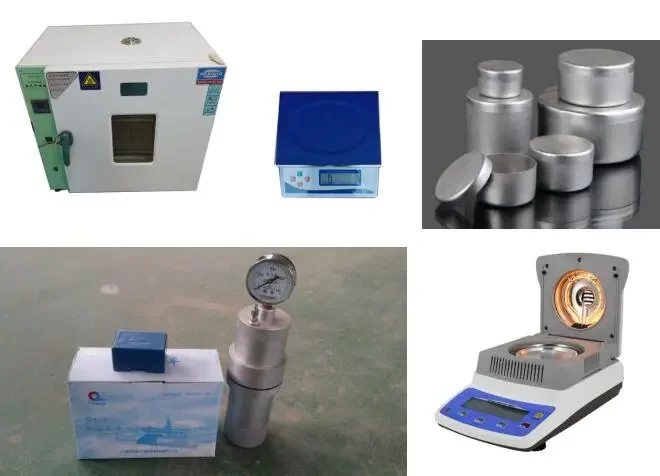
- Weigh the extracted soil and determine moisture content.
Risks and considerations in Santa Ana
Compare a site near the Santa Ana River, where sandy soils compact well and density tests are straightforward, versus a site near the Santiago Creek channel, where silty clays and old fill layers can hide soft zones. In the latter, a single sand cone test may miss a perched water lens that later causes differential settlement. That is why we run multiple tests across the pad and cross-reference with moisture curves from the Proctor. Skipping field density checks in these mixed soils is a risk we see too often in Santa Ana — it leads to cracked slabs and callbacks that could have been prevented with a few extra cones of sand.
This service complements our laboratory testing work for a complete project analysis.
Our services
Beyond the standard sand cone, we offer complementary services to round out your quality-control program.
Nuclear Gauge Density Testing
When speed matters on large Santa Ana projects, we deploy a Troxler gauge for direct-read wet and dry densities. It cuts testing time in half compared to the sand cone, though we always calibrate against a sand cone reference at the start of each day.
Moisture-Density Relationship (Proctor) Testing
Before any field density test has meaning, you need the maximum dry density and optimum moisture content. We run standard and modified Proctor tests per ASTM D698 and D1557 on soils native to Santa Ana, giving you the compaction target for every lift.
Q&A
How does the sand cone method compare with a nuclear gauge for field density tests in Santa Ana?
The sand cone is a direct measurement — you physically dig the hole, weigh the soil, and calculate density. A nuclear gauge uses backscatter radiation and is faster, but it can drift on gravelly or wet soils. For Santa Ana fills, we often use both: sand cone for acceptance testing and nuclear gauge for rapid quality control.
What is the typical cost of a field density test (sand cone) in Santa Ana?
For a single test point with moisture determination, expect a range between US$110 and US$160. Volume discounts apply when testing multiple lifts on the same project. The price includes equipment setup, excavation, oven drying, and a signed report.
How many sand cone tests are needed per lift on a Santa Ana project?
IBC and most Orange County grading ordinances require at least one test per 2,000 square feet of compacted area per lift. But in Santa Ana’s variable alluvial soils, we recommend one test per 1,000 square feet to catch local soft pockets before they become settlement issues.
Can the sand cone method be used on wet or saturated soils in Santa Ana?
The reference range for this service in Santa Ana is US$110 - US$160. The final price depends on the project scope and volume.