Building on fill in Santa Ana is a different ballgame compared to working on native alluvium in the Floral Park neighborhood. Soils in the northern hills near the Santa Ana River are often cut-and-fill zones, while the southern industrial flats near the 5 Freeway sit on deeper, older deposits. Our lab has processed hundreds of samples from both areas, and the difference in compaction curves is striking. A fill that passes a Proctor test at 95% density near Bristol Street might be borderline a mile east. That is why we insist on site-specific foundations on fill analysis before any footing design. We combine field density testing with laboratory consolidation to give you a clear picture of long-term behavior. Every Santa Ana fill project starts with this baseline.
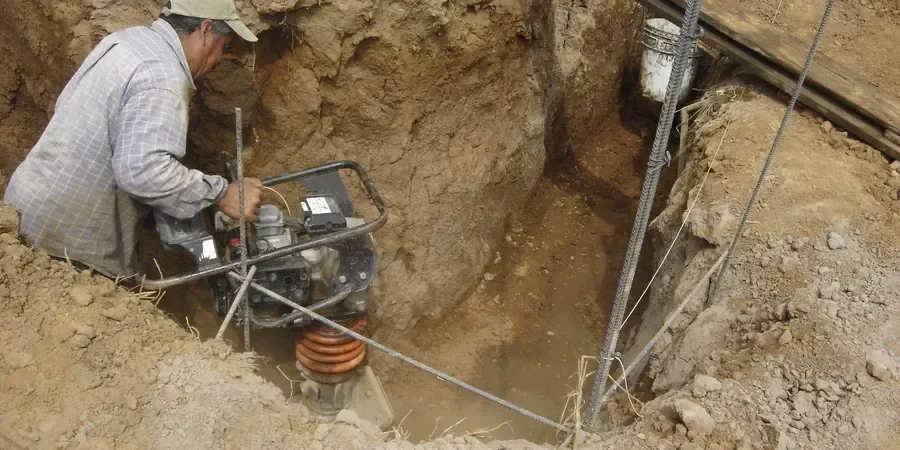
A fill that passes Proctor at 95% near Bristol Street may be borderline a mile east. Site-specific analysis is non-negotiable.
Scope of work in Santa Ana
- Field density by sand cone or nuclear gauge per ASTM D1556
- Consolidation testing on undisturbed tube samples from the fill layer
- Collapse index determination under wetted conditions
Risks and considerations in Santa Ana
IBC 2018 Chapter 18 requires that fills used for support of structures be placed and tested to a minimum of 90% relative compaction. In Santa Ana, where seasonal rainfall can exceed 14 inches per year, unanticipated wetting of fill layers is a real risk. If a fill contains silty sand or low-plasticity clay, even a well-compacted layer can undergo collapse settlement when water infiltrates. That is why our foundations on fill analysis always includes a collapse potential test per ASTM D5333. We have seen slabs on grade in the Sandpointe area develop 2-inch differential settlement because the owner skipped this test. Do not take that risk.
This service complements our laboratory testing work for a complete project analysis.
Our services
Our laboratory supports all phases of fill evaluation with two core services tailored to Santa Ana projects.
Field Density & Compaction Control
We perform sand cone and nuclear gauge tests on compacted fills to verify relative compaction meets project specifications. Results are delivered within 24 hours so the contractor can adjust moisture or rolling passes immediately.
Consolidation & Collapse Testing
Using undisturbed tube samples from the fill layer, we run one-dimensional consolidation tests to predict total and differential settlement. Collapse index testing identifies fills that will settle when wetted, a common issue in Santa Ana's silty sands.
Q&A
What is the cost range for foundations on fill analysis in Santa Ana?
Depending on the number of test points and laboratory tests required, the cost typically ranges between US$810 and US$2,480. A basic package (field density at 3 points + consolidation test) starts around US$810, while a full program with collapse potential and multiple consolidation stages runs higher.
How deep should fill be tested before building a foundation?
We recommend testing to the full depth of the fill layer plus 3 feet into native soil. In Santa Ana, fills can be 6 to 15 feet deep, depending on the lot grading history. Our analysis uses test pits or borings to verify the fill extent and sample each distinct layer.
What is the difference between relative compaction and collapse potential?
Relative compaction compares field density to the maximum dry density from a Proctor test. Collapse potential measures how much the soil settles when soaked under load. A fill may have high relative compaction but still show collapse potential if it contains silty sand. That is why we run both tests.
Can foundations on fill analysis be done after the fill is placed?
Yes, but it is better to test during placement. Our team can perform field density tests as each lift is compacted. If analysis is done after the fill is complete, we use undisturbed tube samples from the fill to run consolidation and collapse tests. Corrections then require over-excavation or deep foundations.