When we arrive at a site in Santa Ana with a roll of geotextile, the first thing we check is the fabric's grab tensile strength and permittivity. A separator or a filter fabric needs different specs — and the soils here, often silty sands or old alluvium, demand precise numbers. We physically unroll and inspect each lot, verifying the certified values against ASTM D4751 for apparent opening size. For projects near the Santa Ana River or the 55 freeway corridor, we also coordinate with the granulometría lab results to match the geotextile's retention curve to the on-site gradation. That step alone prevents clogging and piping failures down the line.
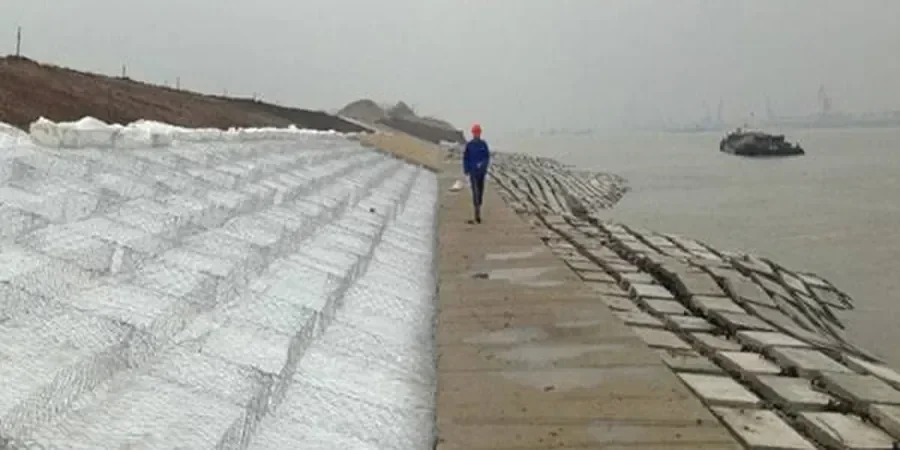
We unroll and inspect each lot, verifying certified values against ASTM D4751 for apparent opening size before installation.
Scope of work in Santa Ana
Risks and considerations in Santa Ana
Santa Ana sits on deep alluvial deposits from the Santa Ana River, with groundwater as shallow as 3 to 6 meters in some neighborhoods. That combination — silty sands plus a high water table — makes internal erosion and clogging the main risk for geotextiles. If the specified fabric's AOS is too tight, the soil particles form a filter cake and the drain stops working. If it's too open, the fines pipe through and the subgrade pumps up. We've seen several pavement failures in the industrial area near the 5/22 interchange caused by a geotextile that didn't match the in-situ gradation. Specifying by the book isn't enough here; you need the actual soil curve.
This service complements our laboratory testing work for a complete project analysis.
Our services
We provide three core geotextile specification services in Santa Ana, each tailored to the local soil conditions and project type.
Filtration and Drainage Geotextiles
Nonwoven fabrics specified for subsurface drainage, trench drains, and retaining wall backfills. We calculate the permittivity and AOS based on the soil's D85 to ensure long-term hydraulic performance without clogging.
Separation and Stabilization Geotextiles
Woven slit-film or high-strength fabrics for subgrade separation beneath roads, parking lots, and rail tracks. We specify minimum grab strength and CBR puncture resistance per the traffic loading class and subgrade CBR.
Erosion Control and Sediment Barrier Fabrics
Temporary or permanent geotextiles for slope protection, check dams, and silt fences. We reference Caltrans' sediment control guidelines and test UV resistance when exposure exceeds 30 days.
Q&A
What is the difference between a woven and a nonwoven geotextile for Santa Ana soils?
Woven geotextiles have higher tensile strength and are used for separation under roads or heavy loads. Nonwoven fabrics have higher permittivity and are better for filtration and drainage. In Santa Ana's silty sands, a nonwoven is usually preferred for drainage applications because it retains fines without clogging.
How do you select the apparent opening size for a geotextile?
We follow the retention criteria from AASHTO M288: the AOS must be less than or equal to 0.3 mm for soils with a D85 below 0.075 mm, and between 0.43 and 0.85 mm for coarser soils. We always run a sieve analysis on the actual site soil first, then match the fabric's AOS to the gradation curve.
Do you provide geotextile specification for temporary access roads in Santa Ana?
Yes, we do. For temporary haul roads and construction platforms on soft ground, we specify a woven geotextile with a grab tensile strength of at least 1100 N and a CBR puncture resistance above 1500 N. The fabric is placed directly on the subgrade, then covered with a 12-inch layer of imported aggregate.
How much does a geotextile specification service cost in Santa Ana?
The typical range for a geotextile specification service in Santa Ana is between US$480 and US$1.090, depending on the number of fabric types to evaluate, the number of soil samples, and whether on-site verification is required. Larger projects or multiple roll lots may fall at the higher end of the range.