ASCE 7-22 and IBC 2021 define the loading and seismic design criteria for mechanically stabilized earth walls in seismic zones. For Santa Ana, with its proximity to the Newport-Inglewood fault zone and alluvial soils from the Santa Ana River, the combination of high water tables and liquefaction-prone sands demands a rigorous MSE wall design. Before specifying reinforcement, the team typically performs a site-specific granulometry and an SPT program to characterize backfill materials and foundation bearing layers. These data points feed directly into internal and external stability calculations per AASHTO LRFD.
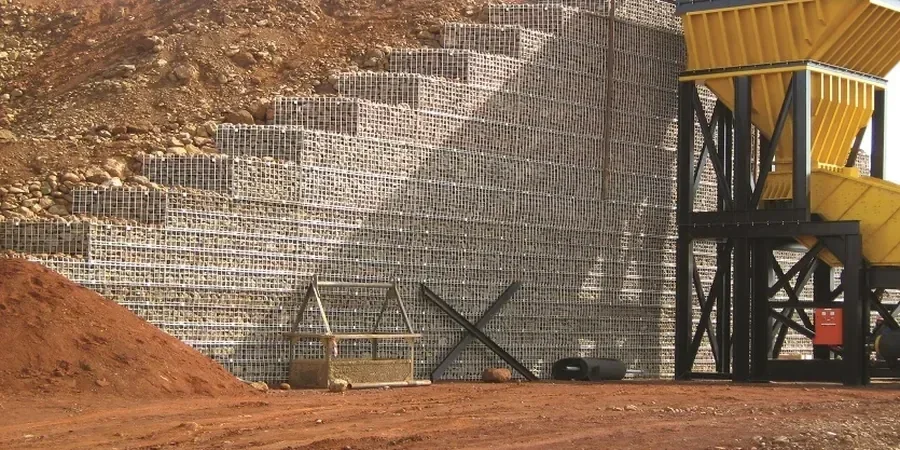
In Santa Ana, the combination of alluvial sands, shallow water table, and seismic demand makes internal stability the critical design check for MSE walls.
Scope of work in Santa Ana
- Selection of geogrid or steel strip reinforcement based on service life and corrosion potential (ASTM D5322).
- Wall drainage systems to prevent hydrostatic pressure buildup behind the facing.
- Connection detailing between facing panels and reinforcement layers.
Risks and considerations in Santa Ana
Santa Ana sits at an elevation of roughly 48 meters above sea level, yet its underlying geology is dominated by young alluvial deposits from the Santa Ana River. These materials, when saturated, can lose significant shear strength during seismic shaking. The 1933 Long Beach earthquake (M 6.4) demonstrated how loose sands in Orange County can liquefy and cause lateral spreading — a failure mode that MSE walls must explicitly resist. A wall designed without accounting for post-liquefaction residual strength or facing connection ductility may suffer catastrophic displacement. Incorporating a geotextile drainage layer behind the wall face is a practical mitigation measure.
This service complements our laboratory testing work for a complete project analysis.
Our services
We provide a full spectrum of MSE wall design services tailored to Santa Ana’s soil conditions and regulatory framework.
Design & Stability Analysis
Internal and external stability checks using Limit Equilibrium and Finite Element methods, with seismic pseudo-static and post-liquefaction assessment per ASCE 7.
Backfill & Reinforcement Selection
Geotechnical laboratory characterization (gradation, Atterberg limits, direct shear) to specify geogrid or steel strip type, strength, and corrosion protection.
Construction Oversight & Testing
Field verification of backfill compaction (ASTM D6938), reinforcement placement, and connection integrity. Instrumentation for wall deflection monitoring.
Q&A
What is the typical cost range for MSE wall design in Santa Ana?
The cost for a complete MSE wall design package — including geotechnical investigation, numerical analysis, and construction drawings — typically ranges between US$1,200 and US$4,240, depending on wall height, site access, and number of seismic load cases.
Can MSE walls be built on liquefiable soils in Santa Ana?
Yes, but the design must address post-liquefaction residual strength and deformation. Techniques include deep soil improvement (stone columns), lightweight backfill, or reinforced soil foundation layers to reduce seismically induced settlements.
What reinforcement type is recommended for long service life in Santa Ana’s climate?
Polyester (PET) geogrids with alkaline-resistant coatings are preferred for permanent walls due to their corrosion resistance. Steel strip reinforcements require galvanization and a minimum concrete cover of 75 mm per AASHTO specifications.