The contrast between the loose, sandy deposits near the Santa Ana River corridor and the denser alluvial fans closer to the Santa Ana Mountains means that two projects just a few miles apart can demand completely different foundation solutions. Relying on a single soil strength assumption for a development in the South Coast Metro area, for example, would carry unnecessary risk. That is why we perform the triaxial test in Santa Ana as a standard tool for measuring drained and undrained shear strength, giving engineers the data they need to match foundation type to actual ground conditions. Before finalizing footing dimensions, many teams complement this analysis with a density cone penetration test for field verification, or they request direct shear on compacted fills when granular behavior is the primary concern.
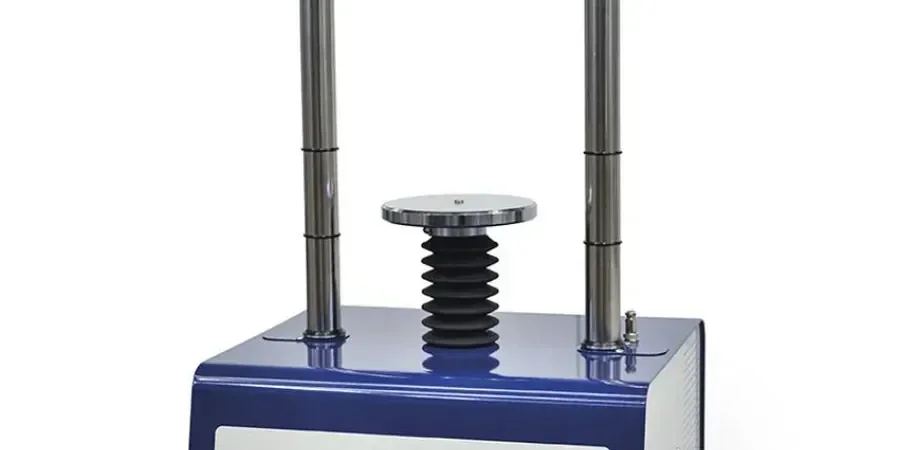
For projects near the Santa Ana River, loose sands can lose strength rapidly under cyclic loading, making the triaxial test a non-negotiable input for liquefaction screening.
Scope of work in Santa Ana
Risks and considerations in Santa Ana
In Santa Ana, we frequently see projects where the geotechnical report only includes SPT blow counts and Atterberg limits, yet the structural design relies on a cohesion value that was estimated from a correlation table rather than measured. That shortcut becomes a real problem when the foundation is sized for drained conditions but the soil actually behaves undrained during construction — or vice versa. A triaxial test in Santa Ana eliminates that guesswork by directly measuring the strength envelope under controlled drainage conditions. For a 4-story residential building on shallow foundations, the cost of a few triaxial specimens is negligible compared to the expense of repairing differential settlement after occupancy.
This service complements our laboratory testing work for a complete project analysis.
Our services
We offer two standard triaxial configurations that cover the vast majority of projects in Santa Ana, from single-family homes to commercial strip centers.
Unconsolidated-Undrained (UU) Triaxial
Three specimens tested at different confining pressures without drainage. Provides total stress parameters (Su, φ_total) in less than a day. Ideal for rapid assessments on cohesive soils where pore pressure dissipation is negligible during loading.
Consolidated-Undrained (CU) Triaxial with Pore Pressure
Specimens are saturated and consolidated before shearing under undrained conditions. Pore pressure transducers record the development of excess pore water pressure, yielding effective stress parameters (c', φ') and Skempton's A coefficient. Recommended for embankments, retaining walls, and any project where long-term stability governs the design.
Q&A
What is the difference between UU and CU triaxial tests?
The UU test shears the specimen immediately after applying confining pressure, so no drainage occurs during the test. It gives total stress parameters used for short-term stability analysis (e.g., end-of-construction conditions). The CU test allows the specimen to fully consolidate under the confining stress before shearing, and pore pressure is measured throughout. This provides effective stress parameters for long-term stability and is the standard for projects where groundwater or drainage conditions change over time.
How much does a triaxial test cost in Santa Ana?
For a standard UU test on three specimens, the typical range is between US$1,880 and US$3,090, depending on the number of confining stages and whether pore pressure measurements are included. CU tests with full saturation and pore pressure monitoring fall at the higher end of that range. Volume discounts apply when testing multiple specimens from the same project.
Can the triaxial test detect liquefaction potential?
The triaxial test alone is not the primary screening tool for liquefaction — that is typically done with SPT or CPT correlations (Youd-Idriss, NCEER). However, once a site is identified as potentially liquefiable, cyclic triaxial tests (ASTM D5311) can be performed to directly measure the cyclic resistance ratio (CRR) under simulated earthquake loading. For most projects in Santa Ana, the standard monotonic CU test provides the baseline strength data, and cyclic testing is reserved for critical structures or sites with high seismic hazard.